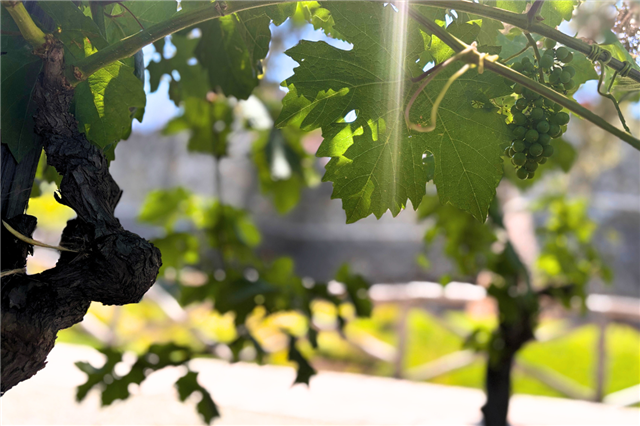
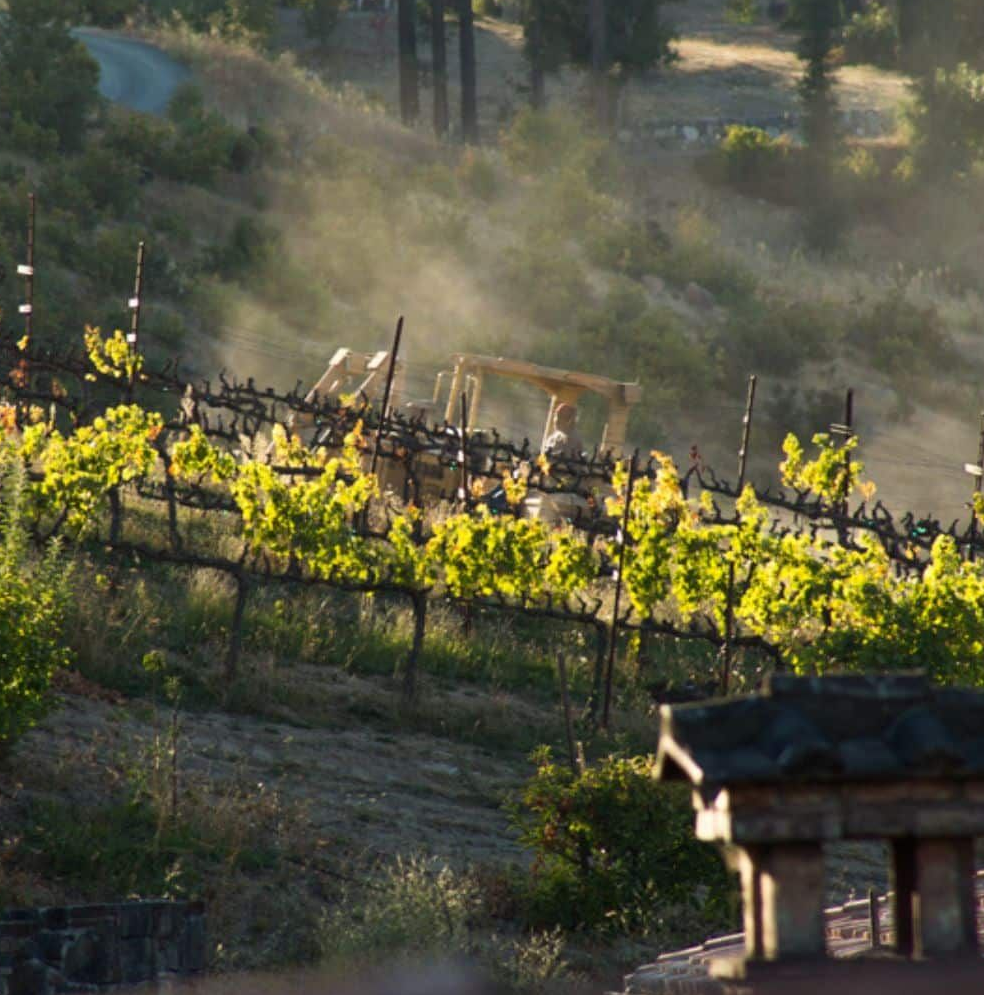
Under the canopy of the vines, hangs the future of wine country. The 2026 Napa Valley growing season continues to move at an impressive pace, with vineyards across the Sonoma and Napa wine regions showing signs of an earlier-than-usual vintage.
According to Director of Winemaking Peter Velleno,
“The vines look very healthy, and we are due for an early harvest. We should see Veraison very soon. We hope we will not experience extremely high temperatures as we go through summer.”
What is veraison looking like this year? As of June 23, the annual transformation when grapes begin changing color and transitioning from growth to ripening, has already been detected in our Napa Valley Chardonnay and Sangiovese vineyards.
While veraison is a celebrated milestone every growing season, seeing it in June is unusual. Historically, veraison in Napa Valley and neighboring Sonoma and Mendocino counties is more commonly associated with late July. The appearance of color this early suggests that Napa Valley harvest could arrive one to three weeks ahead of average, depending on how the weather affects grape ripening throughout the remainder of the summer.
For vineyard crews, the season has been progressing steadily. More than half of the vineyard acreage has already been leafed and trimmed. Some minor sunburn has been observed on leaves and clusters in warmer vineyard locations, though incidence remains low. At this stage, crop thinning is not anticipated, though cluster development will continue to be evaluated as veraison progresses in wine country 2026.
Disease pressure has remained minimal throughout most of the sites, as teams continue targeted hands on vineyard management practices to maintain fruit quality as the 2026 wine growing season advances.
Last year, the first signs of veraison were observed during the first two weeks of July. Based on this year's vine development, vineyard managers anticipated seeing color in the earliest-ripening blocks by late June; a prediction that has now proven accurate.
The arrival of veraison marks what many consider the turning point of the 2026 vintage. While it signals the beginning of fruit ripening, it also starts the countdown to our Sonoma County, Mendocino and Napa Valley harvest season. If current conditions continue, sparkling wine grapes and early white varieties may be harvested as early as mid-August. Chardonnay and Pinot Noir vineyards to follow in late-August through September, while Napa Valley Cabernet Sauvignon and other later-ripening red varieties would likely still be harvested into October.
An early season is often welcomed by growers. According to Velleno, earlier harvests generally provide greater flexibility in achieving full ripeness before autumn weather becomes a concern.
"Early is better than late, because you have a better chance to achieve full ripeness before the weather cools off and rain starts,"
he explains. "Late years are stressful because some grapes might not be ready to pick, but you have to harvest them anyway. Rain and almost-ripe grapes is generally bad. Cold weather can actually make sugar levels reverse and go back down slightly. Eventually rot develops if it is wet."
Still, an early season comes with its own challenges.
"We do not want extreme heat that accelerates ripening too quickly, where the sugar accumulation outpaces the flavor development," says Velleno.
For now, the outlook remains positive. The vines are healthy, fruit development is progressing well, and the first signs of veraison have arrived earlier than expected. While much can happen between now and the Napa Valley Cabernet Sauvignon harvest, the 2026 vintage is already shaping up to be one worth watching.